Creating Great Moments In Worship, Part 1
Great worship moments rarely happen on their own–although God is very capable of bringing them about without our help! Some worship leaders think it’s more spiritual when less planning is involved. My humble opinion is that God can work in advance, too; He can anoint, inspire and guide in the planning of a service a month away. And why wouldn’t He? We don’t wait to plan for a Thanksgiving feast on the day before: we spend time in advance thinking about the menu, the people we invite, and the setting in which it will be served. Great moments in worship are like this, and we have a better chance of reaching our goal if we spend time praying, thinking about, and designing a plan. God already has a one–we just need to seek and discover it.
In planning for a service, I use 5 general guidelines: 1) Determining the Spiritual Statement being made; 2) the Song Selection; 3) Sequencing of the songs and spoken segments; 4) the Segues between each piece in the service; and 5) Sensitivity to people and, most importantly, the Spirit.
Spiritual Statement
Each church has a unique personality and the songs used every week are a reflection of that individuality. As one considers the songs for a given week, we must consider the spiritual statement to be made in the service as a whole. Next, we must consider the season of the year and the appropriate songs to use. Other questions might be asked: is the pastor preaching on a special subject?; is our church needing to focus on some specific scripture or topic?; is the audience going to be of a certain age or will it consist of mixed generations? Some generations outside of the main stream will probably feel left out at times, but the objective is to reach the greatest population.
Song Selection
As previously mentioned, the choice of certain songs is unique to each congregation. There are no right or wrong songs to use–just effective ones–those that foster great worship moments. Some songs are written “about” God and are filled with statements about His character, majesty, holiness, etc. (many hymns are written about God). Other songs make statements “to” God, as if in a conversation.
Sequencing
My suggestion is to sequence the songs by placing the ones about God closer to the beginning of the service as the congregation is warming up to the room (they just dropped off their kids in the nursery and have toted them from the parking lot–so don’t scorn them if it takes a few minutes for them to make the transition). Save the conversation songs for later when a more intimate moment is desired. The start of a service usually requires a faster tempo. Then, as the the service transitions into an introspective, more worshipful moment, slower tempos are better suited.
The mental picture here is much like inviting people to your home: you greet them at the door and work your way inside. Everyone settles in, becoming relaxed as the evening progresses. Conversations usually become more personal as defenses fall and authentic communication can be accomplished.
Choosing the correct key for each song is imperative to creating a great moment in worship. Since the service is about everyone singing together, the congregation needs to be able to sing the notes. Considering the vocal ranges of Mr. Smith, the baritone, to Mrs. Jones, the soprano, we must select keys that allow the melodies to stay within the congregational singing range. This range starts with B flat, below middle C, in the lowest register, to the D, an octave and a whole-step away from middle C, for the highest. The range is obviously limited because the general public aren’t vocally trained as soloists. Stay within the congregational singing range as you choose songs. Maybe the keys you’ve been choosing are the reason your people don’t sing!
Segues
Segues between moments are critical. Try to allow as little lag-time between each piece as as possible. Even nano-seconds of “dead air” are distracting to great worship moments. Work out key changes by using the simple technique of going to the dominant chord of the new key, and using a suspended 4th in the first two beats of the bar, then resolving it on the last two beats. A tempo can also be changed as you ritard during the modulation. Keeping songs with related keys together, as well as modulating by half or whole steps, make for cleaner and better flowing transitions.
Sensitivity
I always make it a priority to be sensitive to those who are in the service each weekend. It is my goal that they “win” in worship; I want them to connect with God during that time. I try to remove any distractions that may inhibit that connection–be it physical, musical, or spiritual. I choose and arrange the songs with this in mind. Each stage movement is scrutinized, illuminating any impediment inhibiting a full focus on God during worship. The ultimate sensitivity, though, is toward God: He is the ultimate focal point and object of our adoration. Always be ready to make a change if God is leading in another direction. Our plans are just a flexible starting point in the large scheme of things.
Pray before you prepare. Think about these items I mentioned today. They aren’t an exhaustive list, but are a great way to start the journey. Blessings to each of you as you prepare to lead your congregation toward the Throne of God each week. Join me again as I explore more helpful tips in Creating Great Moments In Worship, Part 2.
Write me with questions, comments or suggestions:
jamie@jamieharvill.com
A Day To Remember
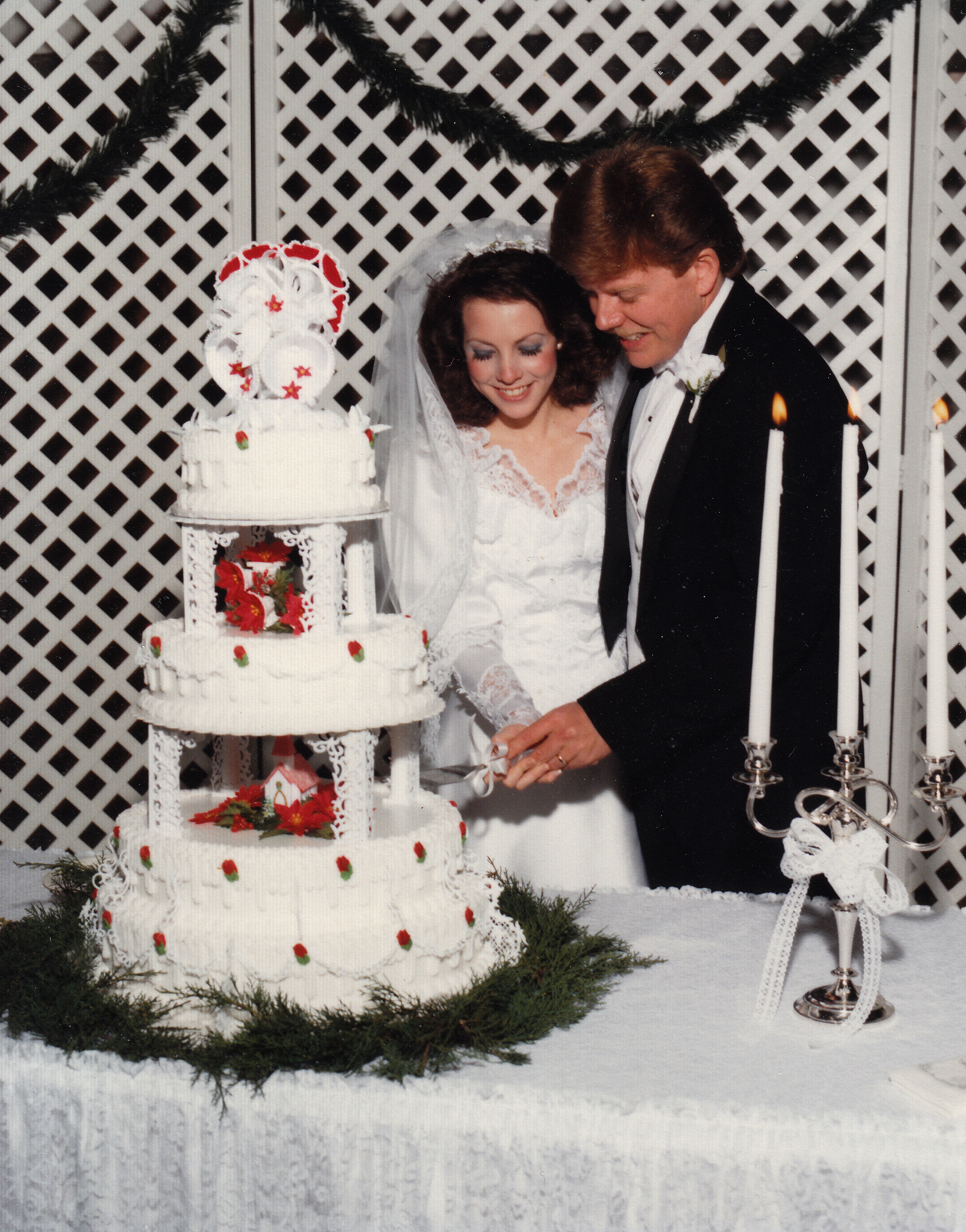
Today marks our 25th wedding anniversary. Brenda and I walked down the aisle–flanked by Christmas trees decorated with white doves–a quarter of a century ago, this evening. We were joined by family and friends from all over the US. South Alabama in December is mild, and the atmosphere in the church gym that night was as romantic as we could make it; we tried to distract attention from the basketball goals in the background, but we just couldn’t hide them. That night, two kids made a promise that we both consider to be our best decision in life– second only to following Christ. We celebrate today as we behold our two great kids and their spouses. The blessings we have seen unfold over time is proof that God has been very good to us.
Happy anniversary, Sweetheart.
Today is also a sad one as two of my dear friends are being buried–one in Mobile, Alabama and another in Murfreesboro, Tennessee. They didn’t know each other, but they both had a big impact on my life. Brenda wrote some tender thoughts in her blog yesterday about their passing and the memories that remain:
Auld Lang Syne
I’m sitting here listening to Al Green, once again, and rehearsing the sad notes of the week. My DH lost two good friends this week, both good men who loved their kids and contributed much to the world. One friend, Danny, goes way back to when my daughter was born (she’s 22). He was our pastor then, and our friend. Our kids spent countless hours before, during and after church running up and down the pews and around the church parking lot, waiting for their parents to quit talking and take them home!
The other fellow, David, is a new friend whom my husband often shared lunch with on weekdays when the two would get together with another fellow and talk ‘real guy’ talk. They shared Popsicles, hamburgers and inside jokes. David was full of wisdom and candor, and always left my husband encouraged after their visits.
Both of these departed men will be sorely missed.
A friend can’t really be replaced, once lost. There’s no price tag, and no value for insurance purposes. They are one of a kind and should be appreciated when they’re around, since you never know when they’ll be gone.
The holidays are a terrible time to lose a loved one.
Guitar Nails
 Sometimes when I am paying for an item at Target or somewhere like that, people can give me a funny look because the nails on my right hand are really long and the ones on the left are normal. I guess they think I’m some kind of weirdo; if they ask me, I tell ’em the truth: I am a guitar player.
In a guitar picker paradise like Nashville, this curiosity is less common than places with a smaller professional-musician population, but people can sure stare sometimes. Really, it’s just the thumb and three fingers of my right hand, excluding the little pinky-finger, that are longer than usual. As an acoustic guitar player, I am dependent on my nails to act like picks when I perform finger-style/ folk guitar playing. I sometimes use my nails instead of a plastic pick when playing electric guitar.
Most of my life I have been a nail biter and didn’t have enough nail length to create the crisp, clear sound that properly cared-for nails can offer. When I did grow my nails out, they were weak, and even strengthener didn’t help. So I went to a nail salon.
It can be kind of awkward when they ask if I am waiting for my wife and I say, “No, <span style=”font-style: italic;”>I </span>wanna get <span style=”font-style: italic;”>my</span> nails done!” They usually look with even more suspicion when I only want three fingers and a thumb of one hand done. Then with a sheepish grin I say, “Guitar player…,” and they begin to understand–sort of. I had my nails done every two weeks for over a year until I got curious and went to Walgreens to buy a do-it-yourself overlay kit so I could “save money” and do them at my leisure. At first, I was terrible at it, and it gave me great respect for those ladies at the salon! I managed to get the hang of it, and now I can do my own nail maintenance. Plus, doing the nails at home means I don’t have to shrug my shoulders in surrender when the other salon patrons look at me funny!
James Taylor has a website that offers an interesting video on how he cares for his nails. JT is the “maestro” when it comes to finger-style playing. If you get the hang of either using his method of nail-care or mine, using acrylic overlay, you can be on your way to great acoustic guitar tone.
Me & My Telecaster
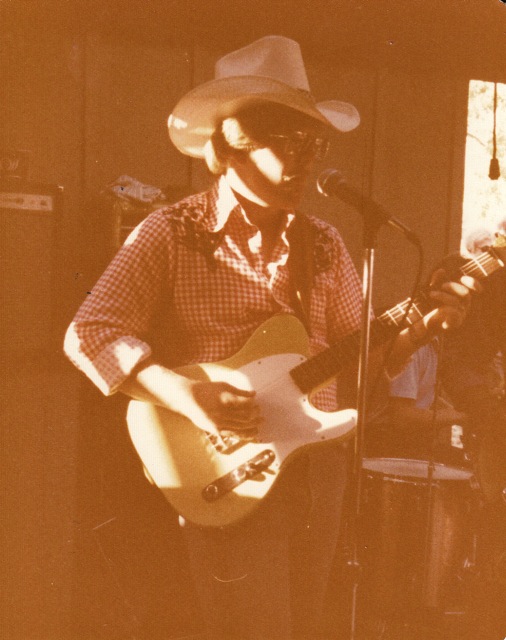
I know the day that my love affair with the Telecaster started. It was at a wedding in 1977, with a band of California friends booked to play the reception, and we were desperately trying to be like our favorite country musicians (see photo-the actual gig!). A friend of the lead singer lent me a pristine, 50’s era Fender Telecaster that was housed in it’s original tweed case. I wasn’t enamored with the age of it (I was clueless!) as much as how it felt when I picked it up and held it in my hands. It was a match!
I have been reading a biography about Buck Owens and, just today, read the account of Buck’s lead guitar player/ harmony singer’s death. Don Rich was a necessary ingredient in the Bakersfield sound that Owens made popular in the 60’s. With Don’s fatal motorcycle crash in July of 1974, the importance of his Tele picking was proven crucial. Don was gone and so was the “sound.” I followed Rich’s twang as a kid, albeit subconsciously, as I listened to Tiger By the Tail and Act Naturally on a local, southern California country radio station.
My teen years were filled with dreams of joining the Eagles, Linda Ronstadt’s band, or Souther-Hillman-Furray; their country roots were exposed to impressionable wannabes like me. I loved the steel guitar and the way Clarence White ‘s b-bender emulated it. As I grew into my twenty’s, I was mesmerized by Emmylou Harris and her Hot Band with James Burton and Albert Lee providing the twang. When Ricky Skaggs busted away from Emmylou’s band and went out on his own, the skillful Ray Flacke joined him. His playing took a new turn and it blew my mind! It still amazes me that two of the best country pickers–Lee and Flacke–hail from England.
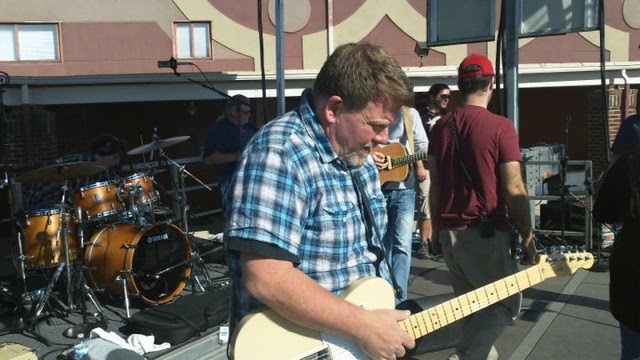 I will never attain a thimble-full’s worth of Tele virtuosity that my heroes possess. I can only dream and strive for the ultimate tone as I fasten on my Telecaster and plug it into my favorite tweed amplifier. I swear, there’s nothing better than a bare-naked Tele through a tremolo and a tube amp. It gets me every time.
Photo-lower right: Me & my “most recent” Telecaster, Fall, 2010
Dumpster-Diving and Other Careers…
I have written about it before, but I am even more surprised lately how Americans have embraced TV shows about collecting and auctions. I have been a fan of PBS’s Antiques Roadshow since it’s U.S. debut, as well as Britain’s version–the one that started it all. Cash In the Attic is another show that I would always break for while surfing the seemingly endless cable landscape.
There is a new breed of auction-type shows that have captured my attention, and that of millions of others as evidenced by through-the-roof ratings. My faves are, of course, Pawn Stars and American Pickers. But some new shows have joined the list. Hollywood Treasure is about the search for movie and TV memorabilia, with some classic comic books thrown in for fun. Then there’s Storage Wars about a motley crew of deal-divers, ready to bid on the fruit of people’s unpaid storage-unit bills with fists filled with thousands of dollars. They have proven that huge profits can be made as valuables are sifted from the mundane. Auction Kings is about an Atlanta auction house and the interesting items (and characters) that come through it’s doors.
The craze for home improvement has at least two cable networks fully dedicated to do-it-yourself home repair. I guess it all boils down to the fact that instead of buying new, Americans are opting for repairing what is broken, or finding crazy deals on second-hand items; the slow economy has apparently paved the way for the current phenomena. High-end collectible markets seem to be booming even as middle-class Americans are clamoring for cash just to pay for groceries and housing. Nevertheless, many of us are making do with treasures already in our grasp. If not, someone else might find great worth in what we call trash. It might be profitable to search Ebay’s market-value for our refuse before we take a trip to the county dump. Who knew that dumpster-diving could become such a lucrative career?
Copyright © 2002- Jamie Harvill. All Rights Reserved. Website By Josh Harvill.