

Fiat Money
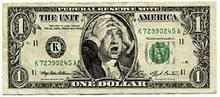
The quest for gold in today’s economy seems to rival Cortez and his band of 190 Spaniards in the early 1500’s. Every other advertisement on conservative talk radio is pushing the wisdom of acquiring gold in lieu of investing the failing US dollar. As a good investment it is arguable, but no one can challenge the wisdom of the gold standard.
A true gold standard came to fruition in 1900 with the passage of the Gold Standard Act and came to an end in 1933 when President Franklin D. Roosevelt outlawed private gold ownership (except for the purposes of jewelery). The Bretton Woods system was established in 1946 to allow governments to sell their gold to the United States treasury at the price of $35/ounce. The system ended on August 15, 1971, when President Richard Nixon terminated the trading of gold at the fixed price of $35/ounce. At that point, for the first time in history, formal links between the major world currencies and real commodities were severed.
This brings us to today and fiat money, which is defined in economic journals as “money that is intrinsically useless; is used only as a medium of exchange.” So, that means that every dollar represents nothing. Basically, every buck that we surrender to a store clerk or the Salvation Army at Christmastime is an empty promise, so to speak. It’s frightening that our dollar is shrinking everyday and our prominence as a powerful nation is diminishing at an equally brisk pace.
Yesterday I was working on a song with Gary when we took a short break. Gary opened a package from an aspiring songwriter who carefully submitted neat lyric sheets and printed music to accompany a CD which contained the recorded songs. It was impressive, save for one thing: when Gary opened the CD case there was no CD in it. The comical moment sadly reminds me of our dollar–it looks impressive but there’s nothing inside.
Behaving Badly
I heard this morning that Elizabeth Edwards, wife of Senator and estranged scoundrel, John Edwards, has been given word by her doctors that there is nothing more they can do about her cancer. Although John is at her side along with other family members, I can imagine the cold reception he must get when he walks in the room. He had a baby with a campaign staffer a few years ago, right under the radar of his loyal, ailing wife.
Gary Sadler and I watched a DVD about the Christian singer/ songwriter, Larry Norman. After he passed away in February, 2008 of heart failure, many hidden stories from his past are now coming to the surface. He was a very selfish man and left broken relationships strewn across the landscape of his life since he started his music career in the 1960’s, maybe even into his childhood. Buck Owens, a hero of mine since childhood (I used to listen to his songs on a portable AM radio) and the seemingly good-guy from Hee Haw, has been revealed, years after his death, to be an absolute jerk. His biography reveals that he must have had bi-polar disorder. Larry Norman was perported to have mental illness in his family, too.
As I read the book about Martin Luther King’s killer, James Earl Ray, called Hellhound On His Trail, I was disheartened to see a duplicitous man in MLK, behaving badly in the shadows, just feet away from adoring followers and a desperate country in the throws of a civil crisis. If our hopes are dashed, they are turned to dust when people we admire for so long prove to be something that they are not.
The flashlight of judgment shines right back on me. I need God’s grace and guidance each day to navigate, unscathed, through this life. My problem is when people blame their behavior on an illness when, clearly, they made choices. God, help me to avoid the same potholes.
Big Baby
I try to listen for God’s voice throughout my day. Sometimes He speaks through an inner voice; other times He speaks through circumstances. Whatever the occasion, I know when it’s Him. My greatest measuring device for Truth is the Word of God.
Often, when I am in an especially difficult situation and I need reassurance, I have heard the Lord speak to me through analogies. Recently I received a beautiful symbolic mental picture. As I was seeking wisdom on how to deal with a difficulty, I saw in my mind a baby struggling to get out of his mother’s arms. I knew it was God because, although I am a creative person, that analogy came out of nowhere–and it hit me right between the eyes. The message was telling me to stop trying to pry myself out of God’s plan, protection and providence. Many times I get restless and don’t trust God’s perspective or timing. It was clear that God told me to settle down!
That’s good news for me because it means I can relax. He wasn’t asking me to do something as much as to trust Him. Life is a great-big mystery because, as humans, we don’t know what’s around the bend. We can forecast the weather, analyze the stock market, and watch the idiot lights on our car warn us when it needs servicing. Our walk through this life doesn’t come with devices like these, but I know that I have the Spirit to guide me safely through. When God speaks, I want to listen and obey.
Smile Real Loud
The greatest stage performers make it look easy. Part of the secret is being comfortable with yourself; an audience is comfortable when the performer is comfortable. In fact, talent isn’t the main ingredient in a successful stage performer. Case in point: when the Carter sisters had sound troubles at a concert many years ago, and the bass wasn’t being heard in the P.A. system, Maybelle Carter, the matriarch and, by that point, a well-traveled and highly experienced entertainer, told the girls, “Just smile real loud!”
This advice is gold for any performer. You see, people hear with their eyes: communication is 15% words, 30% tone and emotion, and 55% what the audience sees. I’ve learned a lot from time spent on the road and on stages for over 30 years, making snap decisions when something malfunctions. One time in Houston, we expected our gear to arrive at the venue. Our concert was just hours away but, to our horror, only the snare drum and stand arrived–not the whole drum set; everything else arrived as planned. I turned to my brother Jon, and as the unfortunate bearer of bad news, my expression communicated the obvious: the show must go on. I knew for him it would be like doing a waltz on one leg. With trepidation and mild protest, he eventually succumbed, as a consummate professional does, and did the gig–with flair, by the way. Jon learned to “smile real loud” and received compliments on his drumming!
I do all I can in the planning stage to avoid these “MacGyver” types of situations. But if they do come without warning, know that you have more options than you think. Just make sure to bring along your dancing shoes in your gig bag…
Fish In the Audience

Tommy Shaw is one of my favorite musicians of all time. He is a quadruple threat: a great guitarist, singer, songwriter, and his baby-faced looks have kept him in the running as a chick-magnet way into his 50’s. My buddy, Gary Sadler, had the privilege of meeting him back stage at a recent Styx concert–a band for which Tommy has been playing since 1976. Many of us know his voice from songs such as Too Much Time On My Hands, Blue Collar Man and Angry Young Man. I ran across a web-magazine in which Tommy shed light on the little-talked-about discomfort that affects most musicians when it’s their turn to be an audience member.
Many musicians who travel through Nashville say we are the worst audiences on their itinerary. That is because the seats are usually filled with fellow players and singers. Our tendency is to stand there, cross-armed and blank-faced, not giving needed feedback to the performers on stage. Tommy Shaw talked to writer, Allen D. Tate, about an award show where Styx recently performed. Tommy helps make it clear that when we, the musicians, are not on stage, we are at our most vulnerable state–we do better in the spotlight than in the seats:
Having attended enough shows, I have finally come to the conclusion that I am not a lone freak, I am in a class of freaks of artists that just don’t know what to do with themselves from that perspective. Looking out that night at the audience, brightly lit because the event was televised, I could see them all…So there we were starting into “Blue Collar Man” when I looked out and saw them: Artists, musicians, their spouses and dates, their handlers and relatives everywhere, most of them friends…I recognized that look on their faces – awkward helplessness and ‘fish-out-of’ water’ syndrome…I think artists will agree, we just don’t know what to do when we are audience members. It’s difficult to suspend your disbelief as an audience member because you have too much experience from the stage and you instinctively take on the same reflex reactions as if you were up there, except now you are helpless because you are not in the mix.
The problem extends to the church where pastors and worship leaders have the same difficulties. There is nothing more frustrating than to see the pastor on the front row, fiddling with his sermon notes during a tender moment in worship; or a worship leader checking email on his smart-phone. That might be a reminder for us to be aware of how we present ourselves on and off stage. Some of us “fish” would do better to just swim away!
Copyright © 2002- Jamie Harvill. All Rights Reserved. Website By Josh Harvill.